Blog
Short-Form Video Ideas for B2B Brands: What to Post and Why It Works
Short-form video works for B2B when every clip does one job for one buyer. Here are 15 short-form video ideas for B2B brands, grouped by where the raw material comes from: your product, your people, your customers, and one long video cut down. Each comes with a format spec, the published study behind it where one exists, and a worked example.
Does short-form video work for B2B?
Yes, when each clip carries one useful idea for a named buyer. In field studies of shared video ads, informational ads were shared more on LinkedIn than on general platforms.[1] Research on internet video ads shows attention is won or lost moment by moment, so the opening does most of the work.[2]
Most teams ask what to post this week. The better question is where next month’s clips will come from: your product, your people, your customers and the long videos you already have. For the longer formats those clips point back to, start with our creative video ideas for B2B brands.
Every idea below ends with a worked example for one hypothetical brand: an invoice-automation SaaS selling to finance teams across Southeast Asia. The brand is invented, and no results are claimed for it.
15 short-form video ideas for B2B, by source material
- One feature, one task
- The problem in the first frame
- Release note in motion
- Point the eye at the interface
- One question, one expert
- The myth your team corrects every week
- Phone-shot from the build
- Voice and hands, no face
- A light joke from the support queue
- Brand first, then the customer’s payoff
- The anonymised customer problem
- The buying question, answered by a customer
- Chapter clips from your explainer
- The hook-first recut
- The sound-off caption cut
For aspect ratio, burned-in captions and cutdowns, see our video production glossary.
Ideas from your product
One feature, one task
Format. 1:1 or 4:5 for LinkedIn, 9:16 for Shorts and Reels. Screen recording rebuilt as motion graphics, one callout per step, captions burned in.
Show one task a buyer performs in your product, start to finish. One feature, one outcome, one clip.
Lang, Bolls, Potter and Kawahara (1999) found that in television messages, fast pacing combined with arousing content overloaded viewers and reduced recognition and cued recall.[3] For a product clip: hold the key screen long enough to register, and cut quickly through the calm moments.
Worked example. The invoice platform shows one task: a supplier invoice photographed on a phone arrives as a matched, approved line in the ledger. The approval tick holds before the end card.
The problem in the first frame
Format. 9:16 and 4:5. The opening frame is designed as a still that also works as the thumbnail. Captions burned in.
Open on one image of the problem your buyer lives with, before any logo or title card.
Pieters and Wedel (2004) tracked eye movements on 1,363 print ads with more than 3,600 consumers and found the pictorial element superior at capturing attention, independent of its size.[4] That was print; we apply it to the still frame a feed shows before playback.
Worked example. The first frame is a desk buried under paper invoices, with the last working day of the month circled on a wall calendar. The product arrives in shot two.
Release note in motion
Format. 1:1 for LinkedIn, 9:16 for Shorts. Interface animation with the brand colour used as a recurring accent. Captions.
Every release gives you a clip: what changed, and what it means for the user.
Teixeira, Wedel and Pieters (2010) studied 31 TV commercials with nearly 2,000 participants and found that showing the brand in short repeated pulses, with total brand exposure held constant, significantly decreased commercial avoidance.[5] The study tested TV ads; feed clips are untested.
Worked example. A new bulk-approval button gets its own clip: a dozen clicks, then one. The brand red appears in three brief moments: the button, the cursor trail and the end frame.
Point the eye at the interface
Format. 9:16 or 4:5. A presenter framed beside a screen or device. Captions.
Where a presenter looks decides where the viewer looks.
Sajjacholapunt and Ball (2014) eye-tracked banner ads and found that faces with averted gaze, looking towards the product, increased attention to the ad text and product and improved brand and message memory; faces looking at the viewer pulled attention onto the face.[6] The ads were static banners.
Worked example. A finance lead turns to the reconciliation screen beside her as unmatched invoices clear, and looks back to camera only for the closing line.
Have a product full of clips and no plan for them?
Send us your product tour and the three questions buyers ask most. We will map the short-form series those questions deserve, idea by idea and platform by platform.
Plan a short-form series →Ideas from your people
One question, one expert
Format. 4:5 or 1:1 for the LinkedIn feed. The expert square to camera. Captions with key terms highlighted.
One discovery-call question, answered by your best-informed person in plain language. It is the workhorse of LinkedIn video ideas for B2B.
Tellis, MacInnis, Tirunillai and Zhang (2019) studied the sharing of video ads across social platforms. Emotional ads were shared more on general platforms such as Facebook and Twitter than on LinkedIn, and the reverse held for informational ads.[1] Their data predate Reels and TikTok. For a LinkedIn clip, put the useful answer first.
Worked example. The head of product answers “What happens to an invoice the system cannot read?” She shows the exception queue, names the three usual causes and stops.
The myth your team corrects every week
Format. 9:16 for Shorts and Reels, 1:1 for LinkedIn. The myth appears as on-screen text in the first frame. Captions.
Put the misconception your teams keep correcting on screen, then correct it with something usable today. It is one of the most dependable YouTube Shorts ideas for B2B.
Berger and Milkman (2012) analysed three months of New York Times articles and ran follow-up experiments. Content evoking high-arousal emotions such as awe, anger or anxiety was more viral, and surprising, interesting and practically useful content was shared more.[7] They studied news articles.
Worked example. On screen: “Automation is only for big finance teams.” A solutions consultant shows a three-person team clearing its approvals queue before lunch, and names the one setting they switched on first.
Phone-shot from the build
Format. 9:16, shot on a phone, with a clip-on microphone for clean sound. Captions. Labelled as filmed by the team.
An honest clip filmed by your own engineers or customer success team. Keep the phone look; fix the sound.
Hautz, Füller, Hutter and Thürridl (2014) compared user-made and agency-made videos at low and high technical quality. They found no general superiority for user-made video, but at low technical quality it had a significantly stronger positive effect on source trustworthiness and expertise.[8] The test used a tourism video. Save the polished finish for a brand film.
Worked example. An engineer films the whiteboard where the team mapped a new bank-feed integration and explains the one decision that took a week.
Voice and hands, no face
Format. 9:16 or 1:1. Top-down footage of hands sketching or working in the product, or motion graphics, over the expert’s recorded voice. Captions.
Some of your sharpest people will never agree to a lens. Record their voice, then film their hands or animate over the audio.
No study in our research set tests faceless expert clips on social feeds, so treat this as a studio rule of thumb. Where confidentiality keeps a subject off camera, the kShuttle case study shows how a constraint can become the trust signal.
Worked example. The platform’s head of risk declines on-camera work but records a conversation about duplicate-payment fraud. Three answers become three clips of hands tracing a payment trail on paper.
A light joke from the support queue
Format. 9:16 for Reels and Shorts. Performed by staff. Captions. The product point delivered straight.
Humour is one of the short form video ideas for brands that carries into B2B: the joke earns attention, and the proof stays serious.
Eisend (2009) meta-analysed 369 correlations and found humour raised attitude towards the ad, attention and positive affect, with the effect on liking the ad about twice as large as the effect on brand attitude. Humour also significantly reduced source credibility.[9] Keep the proof straight-faced, and have a colleague in each market check the joke.
Worked example. Two colleagues re-enact the most repeated support ticket: the invoice lost in the spam folder, again. The straight-faced last line shows the forwarding address that fixes it.
Ideas from your customers
Brand first, then the customer’s payoff
Format. 4:5 or 9:16. Customer on camera or as a quote card. A small brand mark in the corner of the opening frame. Captions.
Show whose clip this is early and quietly, then let the customer’s moment of delight land.
Teixeira, Picard and el Kaliouby (2014) tracked the faces of 178 consumers watching 82 ads. Entertainment had an inverted-U relationship with purchase intent, and entertainment placed after the brand appeared was positively associated with purchase intent, while entertainment before the brand was not.[10] Purchase intent was self-reported.
Worked example. A small logo sits top left as a customer’s accounts payable manager says, “We used to chase approvals by email.” The payoff is visual: she approves an invoice on her phone while queuing for a lift, and laughs.
The anonymised customer problem
Format. 16:9 master cut to 1:1 and 9:16. Motion graphics rebuild of the workflow, with no customer names, logos or real screens. Captions.
In fintech, healthtech and cybersecurity, your best customers often cannot be named. Tell the problem they had, rebuilt as a workflow nobody can trace back to them.
No study backs this one; it comes from our kShuttle film, built on a demonstration carrying nothing that belonged to the client.
Worked example. “A finance team running several entities across four markets” replaces the customer’s name. Invoices in four currencies settle into one approval view.
The buying question, answered by a customer
Format. 9:16 and 1:1. Customer on camera, or their voice under quote captions. Posted organically and placed as a paid clip next to content on the same topic.
Every deal has a question buyers trust a peer to answer. Ask a customer to answer it in their own words, cleared by their communications team.
Belanche, Flavián and Pérez-Rueda (2017) ran three experiments on skippable video ads and found high-arousal ads were watched for longer and were more effective in congruent contexts.[11] Place paid versions beside matching content.
Worked example. A customer’s financial controller answers “What did your auditors make of it?” The paid version runs against video content about audit preparation.
Ideas from one long video, cut down
To repurpose an explainer video into short clips, cut along its structure. For B2B short-form video examples to learn from, browse our B2B SaaS explainer examples.
Chapter clips from your explainer
Format. 16:9 master reframed to 9:16 and 1:1. Each chapter ends on a complete idea. Captions, and an end card pointing to the full explainer.
Each chapter opens with its own question on screen, so it stands alone.
Rey and colleagues (2019) meta-analysed 56 investigations with 88 pairwise comparisons and found that segmenting multimedia instruction produced small to medium effects for retention and transfer, and lowered cognitive load.[12] That is learning research; buyers evaluating software are learning too.
Worked example. The platform’s explainer has four scenes: capture, match, approve, pay. Each becomes a clip opening on a question such as “Why do matched invoices still wait for approval?”
The hook-first recut
Format. 9:16 and 4:5. The long video’s strongest visual moment moved to the opening. Captions.
Move the long video’s surprise to the start and let satisfaction build quickly after it.
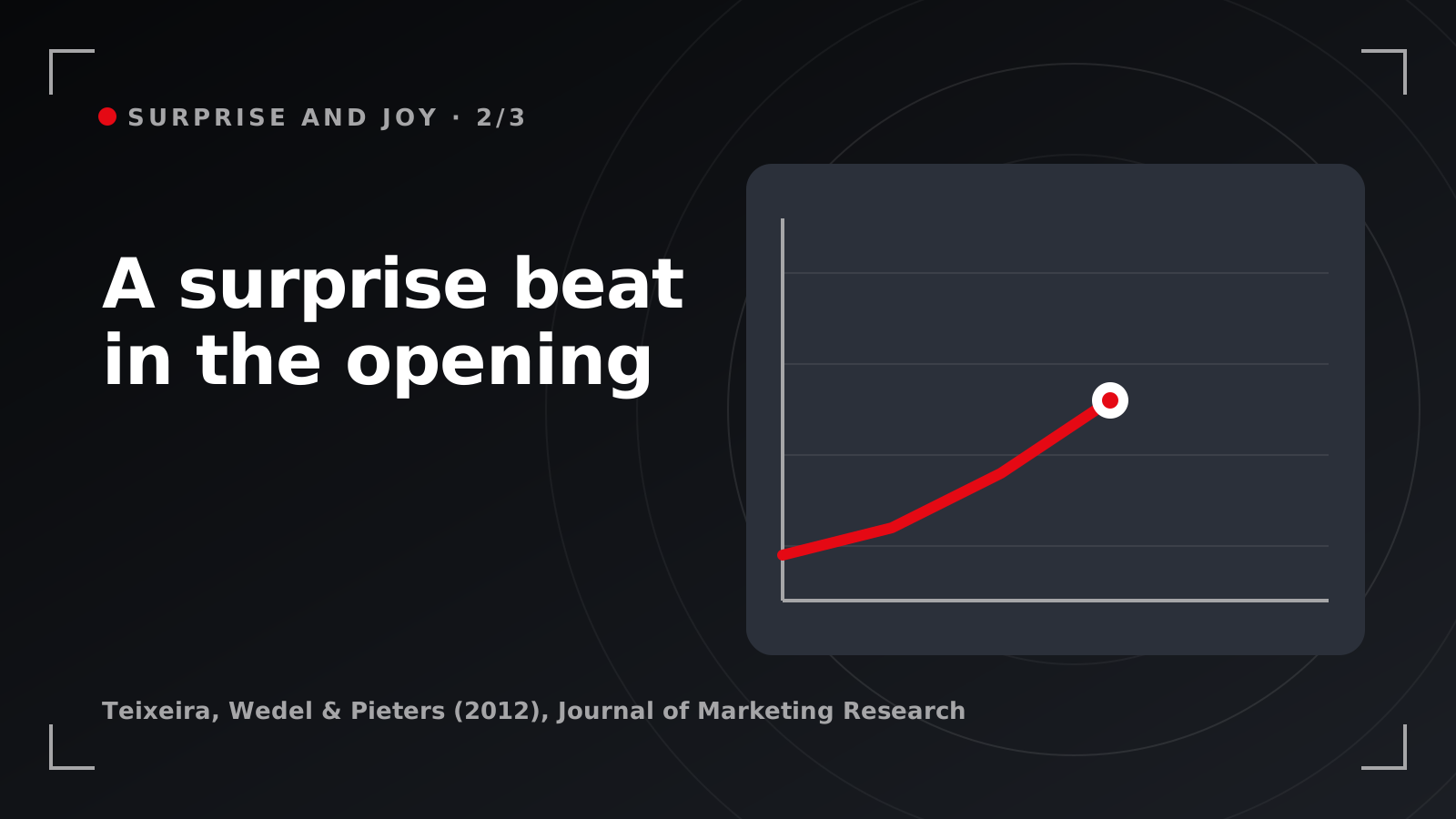
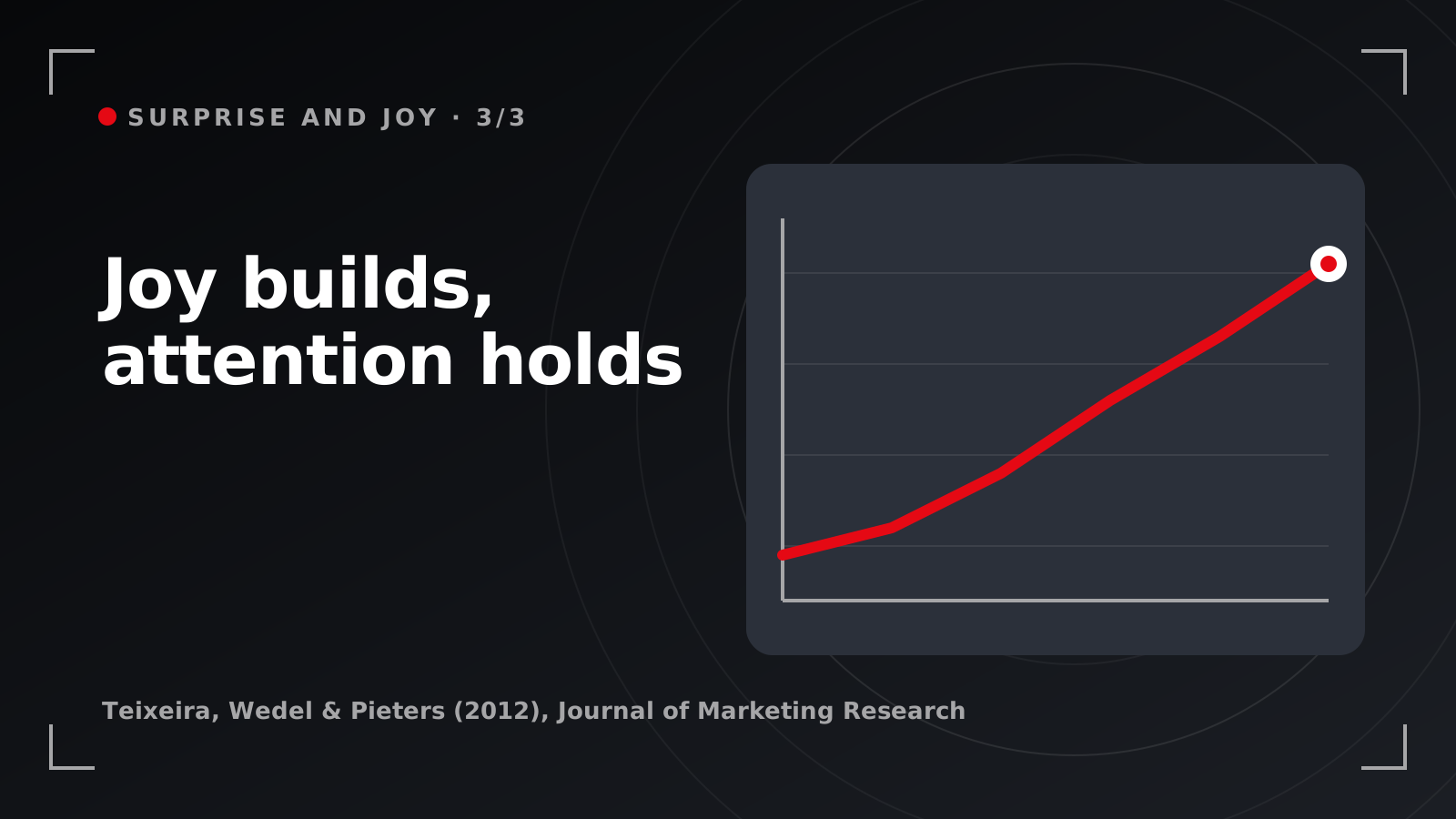
Teixeira, Wedel and Pieters (2012) used automated facial-expression detection, eye tracking and recorded zapping with internet video ads. The level of surprise mattered most for attention concentration, and the speed at which joy rose mattered most for retention.[2] Engagement there meant attention concentration and zapping, measured on ads.
The research · Surprise and joy
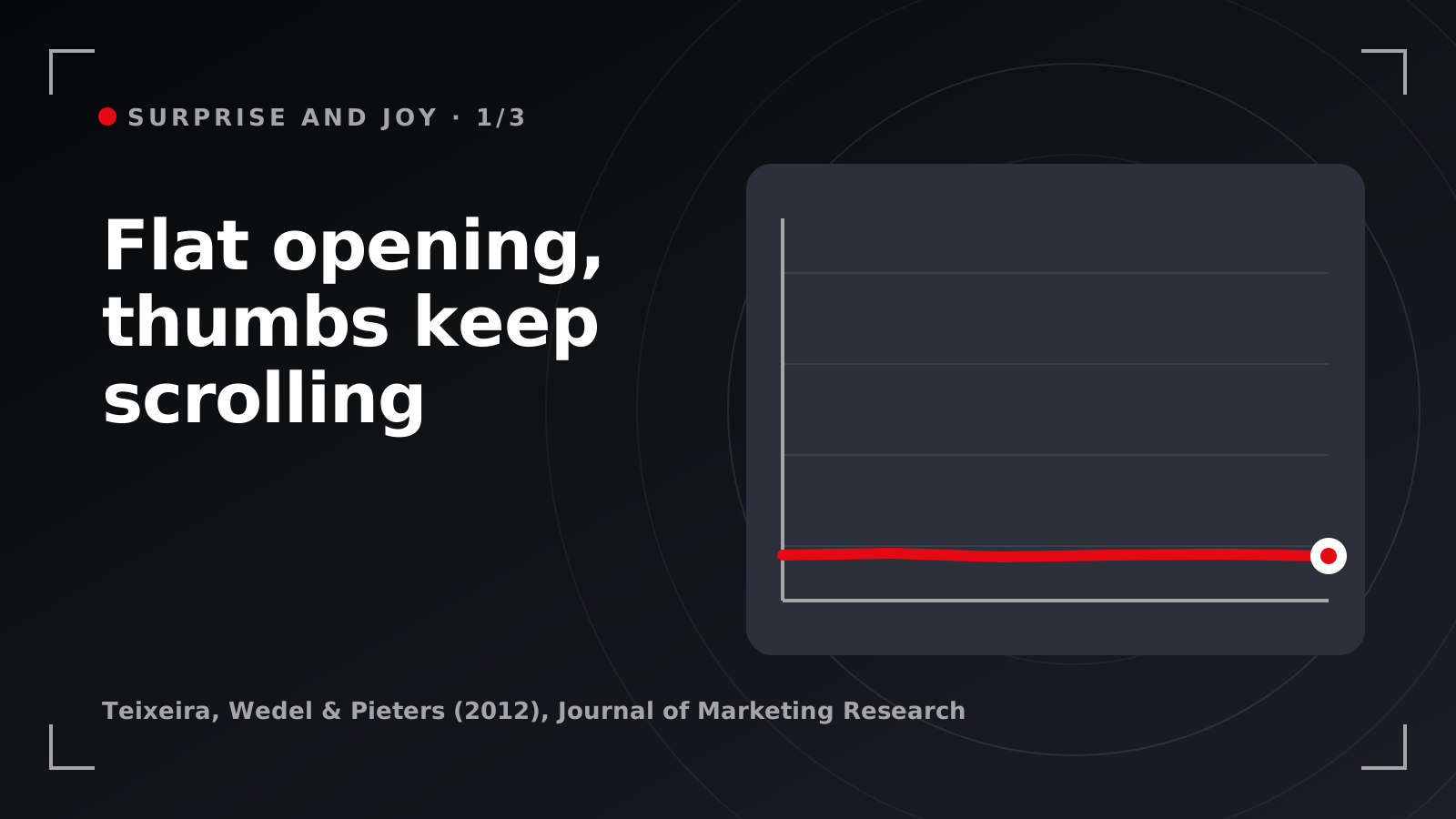
- Flat opening, thumbs keep scrolling.
- A surprise beat arrives in the opening.
- Joy builds quickly, and attention holds.
Worked example. The explainer’s final shot, a tower of paper invoices collapsing into a single approved total, moves to the first second. Joy then rises in quick steps: the capture, the match, the approver’s smile.
The sound-off caption cut
Format. 9:16 and 4:5. Captions designed as typography, placed clear of the platform’s buttons, key terms highlighted. A separate caption file for each language version.
Rebuild the voiceover as on-screen text: short lines, one thought each.
Gernsbacher (2015) reviewed the captioning literature and reported that more than 100 empirical studies document that captioning a video improves comprehension of, attention to and memory for the video, especially for non-native viewers.[13] The review does not study muted social autoplay; our inference is that a sound-off viewer depends on captions entirely.
The research · Captions
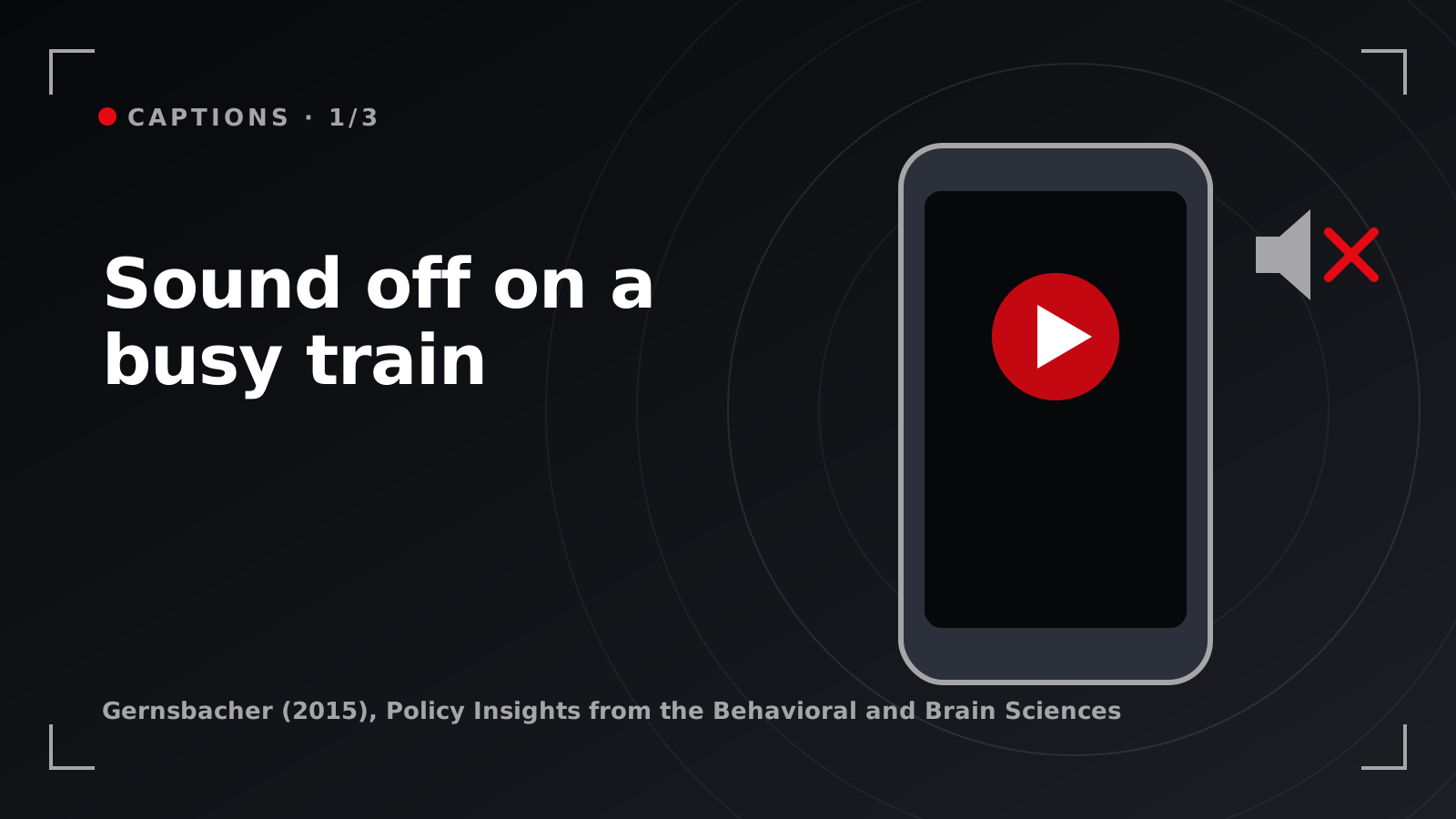
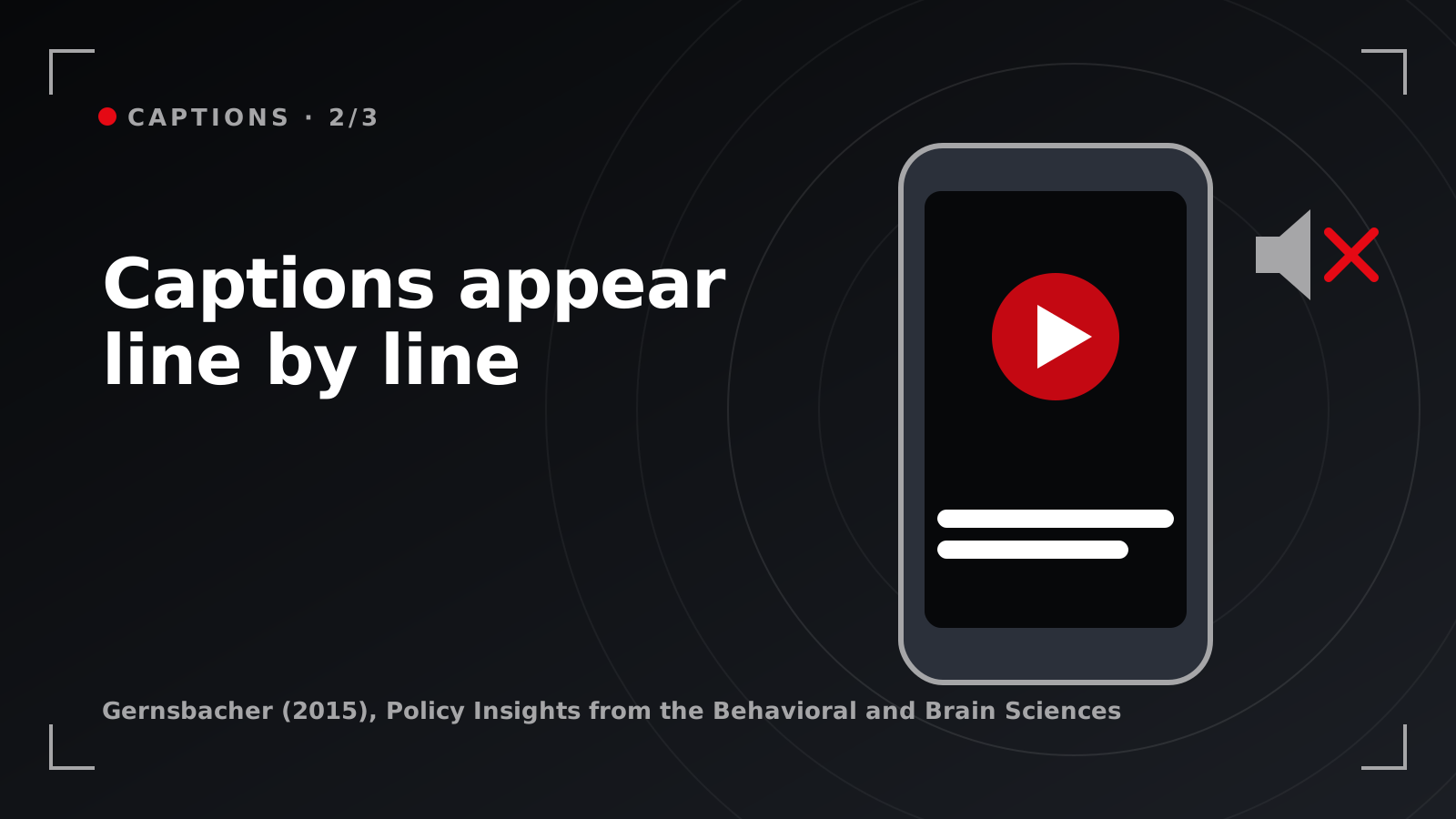
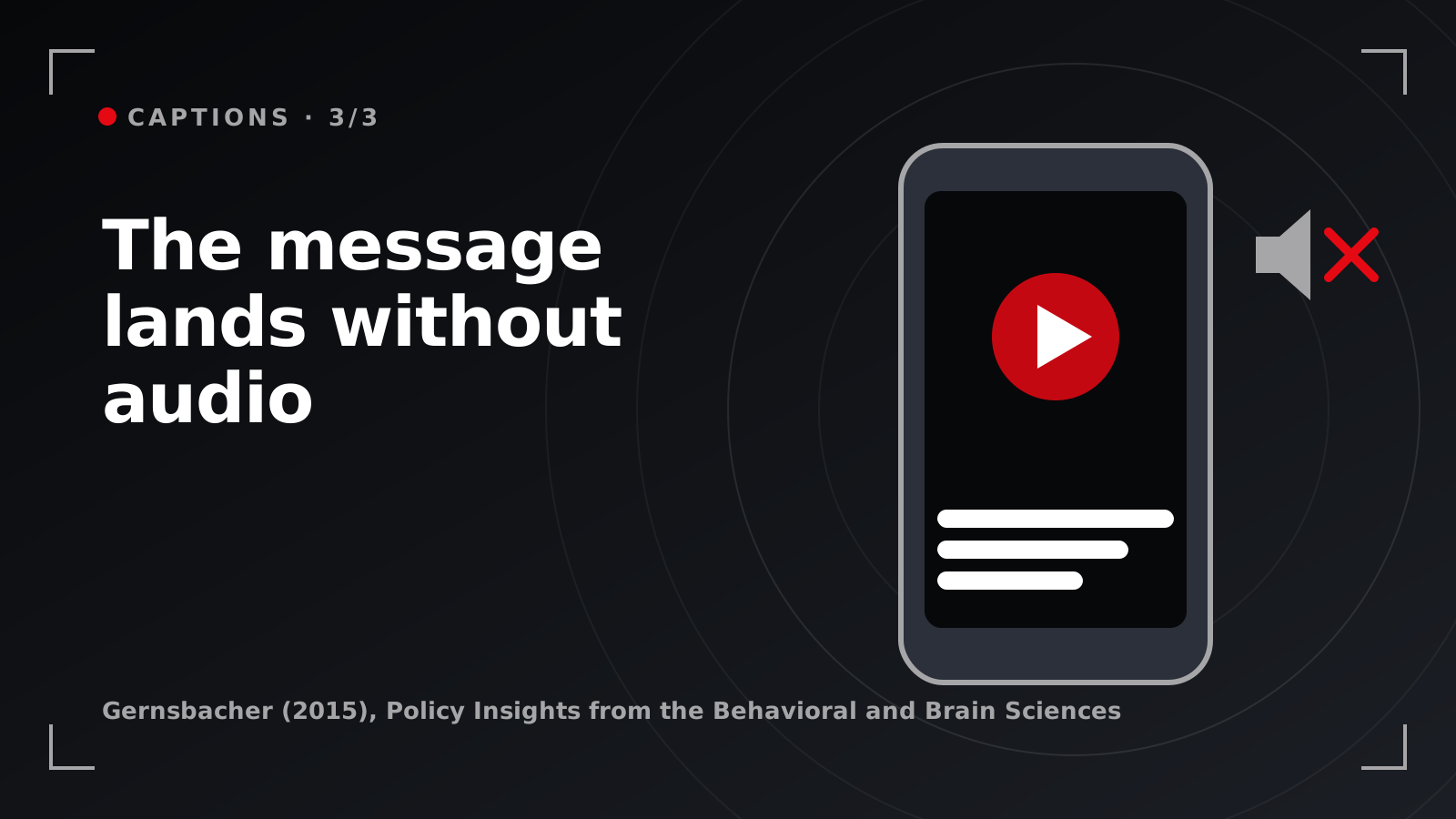
- Sound off on a busy train.
- Captions appear line by line.
- The message lands without audio.
Worked example. The voiceover becomes three-to-five-word lines, with “matched” and “approved” in brand red. Jakarta and Bangkok versions carry Bahasa Indonesia and Thai. Our guide to subtitles and language versions covers the rest.
Where each idea plays across APAC
Use this table to decide which ratio to deliver and which ideas to send where. The caption guidance is our planning rule.
| Platform | Aspect ratio | Caption need | Best B2B idea types | APAC note |
|---|---|---|---|---|
| 1:1 or 4:5 in the feed; 9:16 also supported | Plan for sound off; burn captions in | One question, one expert; one feature, one task; chapter clips; customer answers | The main B2B feed for buyers in Singapore, Australia and India; English cuts travel furthest here | |
| YouTube Shorts | 9:16 | Burn captions in; add subtitle files to the full video | Myth correction; hook-first recut; chapter clips pointing to the full explainer | Shorts sit on the same channel as your long-form videos, so each clip can send viewers to the full explainer |
| Instagram Reels | 9:16 | Burn captions in, clear of on-screen buttons | Phone-shot from the build; support-queue joke; hiring and culture clips | Suits employer-brand clips for hiring engineers and sellers across Southeast Asia |
| TikTok | 9:16 | Burn captions in, clear of on-screen buttons | Myth correction; lo-fi team clips; light humour | Check your buyers are there and your compliance team’s position first; some regulated firms restrict it |
| LINE, KakaoTalk, WeChat | 9:16 or 1:1 files sent in chat | Essential; deliver a version per language | Chapter clips, customer answers and feature clips a champion can forward | Distribution channels for sending clips to prospects and partners: LINE in Thailand, Japan and Taiwan, KakaoTalk in Korea, WeChat for China-facing teams |
The last row matters. Regional deals often run through a Singapore office and country teams, so treat B2B social media video ideas as sales material a champion can forward.
Selling into several APAC markets at once?
See how we shape one idea into many cuts in our portfolio, then tell us your markets and languages. We will plan the ratios, captions and versions into one creative approach.
Talk through your markets →Hooks, captions and length: the evidence
Hooks. Surprise concentrates attention, and joy that rises quickly keeps viewers watching.[2] A strong picture wins the first glance.[4] High-arousal skippable ads are watched for longer when they match their context.[11] One limit applies: very fast cutting over arousing content overloads viewers and cuts recall,[3] so make the hook intense and the explanation that follows steadier.
100+
empirical studies document that captioning a video improves
comprehension of, attention to and memory for the video.
Gernsbacher, Video captions benefit everyone (2015)[13]
Captions. The evidence comes from general video viewing, with the strongest benefit for non-native viewers, which describes many English-language B2B audiences across Southeast Asia. Applying it to muted feeds is our inference.
Length. Tellis and colleagues found sharing of video ads was greatest at a moderate length of 1.2 to 1.7 minutes;[1] for lengths by placement, see how long an explainer video should be.
Win the first frame, hold it with one idea, and write every word on screen for the viewer who never turns the sound on.
For the techniques that make the long video worth cutting down, read explainer video techniques that hold up in the research.
The short version
Short-form video works for B2B when each clip gives one buyer one useful idea. Draw ideas from your product, people, customers and long videos. Open on a strong picture or a surprise, let the payoff build quickly, lead with information on LinkedIn, and caption every cut for viewers watching with the sound off and in their second language. Plan ratios and language versions per market.
Frequently asked questions
Does short-form video work for B2B companies?
Yes, when each clip gives one named buyer one useful idea. Published research on shared video ads found informational ads travelled further on LinkedIn than on general platforms, and studies of internet video ads show that surprise and quickly rising joy keep viewers watching. Plan short clips as a series drawn from your product, your people, your customers and your long videos, and judge them on whether buyers repeat the idea back to you.
What short videos should a SaaS company post on LinkedIn?
Post clips that answer a buyer's question with something they can use: one expert answering one discovery-call question, one feature completing one task, a customer explaining a decision, and chapter clips cut from your explainer. Research on video ad sharing found informational content does relatively better on LinkedIn. Use square or 4:5 frames, burn in captions and put the useful answer in the opening line.
Do B2B short videos need captions?
Yes. A review of the captioning research found that captions improve comprehension of, attention to and memory for video, with the strongest benefit for people watching in a second language. The review did not study muted social feeds, so the sound-off case is our inference, and a strong one: a viewer scrolling with the sound off receives only what is written on screen. Burn captions in for every social cut.
How do you turn one explainer into a month of short clips?
Cut it along its scenes. Each scene that ends on a complete idea becomes a chapter clip, reframed for vertical and square feeds. Add a hook-first recut that opens on the explainer's strongest moment, a captions-led cut for sound-off viewing and a quote clip built from the best line of voiceover. Research on segmenting shows that content broken into meaningful parts is easier to learn from.
What if our experts do not want to be on camera?
Keep their expertise and leave out the face. Record a relaxed conversation, then cover the audio with their hands sketching on paper or working in the product, or with motion graphics built from their explanation. Captioned audio carries the idea. Where confidentiality is the concern, build a demonstration from scratch that contains nothing belonging to a client, the approach behind our kShuttle case study film.
How do you make short videos for audiences across Southeast Asia?
Plan languages at the brief. Keep a clean master and a caption file per language, write on-screen text short enough to survive translation into Bahasa Indonesia, Thai or Vietnamese, and check any humour with a colleague in each market. Match the channel to the market too: LinkedIn and YouTube for most B2B feeds, and LINE, KakaoTalk or WeChat for sending clips directly to prospects where buyers use those apps.
References
- Tellis, G. J., MacInnis, D. J., Tirunillai, S., & Zhang, Y. (2019). What drives virality (sharing) of online digital content? The critical role of information, emotion, and brand prominence. Journal of Marketing, 83(4), 1–20. doi:10.1177/0022242919841034
- Teixeira, T., Wedel, M., & Pieters, R. (2012). Emotion-induced engagement in internet video advertisements. Journal of Marketing Research, 49(2), 144–159. doi:10.1509/jmr.10.0207
- Lang, A., Bolls, P., Potter, R. F., & Kawahara, K. (1999). The effects of production pacing and arousing content on the information processing of television messages. Journal of Broadcasting & Electronic Media, 43(4), 451–475. doi:10.1080/08838159909364504
- Pieters, R., & Wedel, M. (2004). Attention capture and transfer in advertising: Brand, pictorial, and text-size effects. Journal of Marketing, 68(2), 36–50. doi:10.1509/jmkg.68.2.36.27794
- Teixeira, T. S., Wedel, M., & Pieters, R. (2010). Moment-to-moment optimal branding in TV commercials: Preventing avoidance by pulsing. Marketing Science, 29(5), 783–804. doi:10.1287/mksc.1100.0567
- Sajjacholapunt, P., & Ball, L. J. (2014). The influence of banner advertisements on attention and memory: Human faces with averted gaze can enhance advertising effectiveness. Frontiers in Psychology, 5, 166. doi:10.3389/fpsyg.2014.00166
- Berger, J., & Milkman, K. L. (2012). What makes online content viral? Journal of Marketing Research, 49(2), 192–205. doi:10.1509/jmr.10.0353
- Hautz, J., Füller, J., Hutter, K., & Thürridl, C. (2014). Let users generate your video ads? The impact of video source and quality on consumers’ perceptions and intended behaviors. Journal of Interactive Marketing, 28(1), 1–15. doi:10.1016/j.intmar.2013.06.003
- Eisend, M. (2009). A meta-analysis of humor in advertising. Journal of the Academy of Marketing Science, 37(2), 191–203. doi:10.1007/s11747-008-0096-y
- Teixeira, T., Picard, R., & el Kaliouby, R. (2014). Why, when, and how much to entertain consumers in advertisements? A web-based facial tracking field study. Marketing Science, 33(6), 809–827. doi:10.1287/mksc.2014.0854
- Belanche, D., Flavián, C., & Pérez-Rueda, A. (2017). Understanding interactive online advertising: Congruence and product involvement in highly and lowly arousing, skippable video ads. Journal of Interactive Marketing, 37, 75–88. doi:10.1016/j.intmar.2016.06.004
- Rey, G. D., Beege, M., Nebel, S., Wirzberger, M., Schmitt, T. H., & Schneider, S. (2019). A meta-analysis of the segmenting effect. Educational Psychology Review, 31(2), 389–419. doi:10.1007/s10648-018-9456-4
- Gernsbacher, M. A. (2015). Video captions benefit everyone. Policy Insights from the Behavioral and Brain Sciences, 2(1), 195–202. doi:10.1177/2372732215602130