Guides
Creative Video Ideas for B2B and SaaS Brands, and the Research Behind Them
The strongest B2B video ideas start from a buyer’s moment: the day they first meet your category, the week they compare vendors, the meeting where a committee signs off, the Monday they log in. This library groups 16 creative video ideas for tech and SaaS brands by those moments. Each one comes with the job it does, the published research behind it where a study genuinely supports it, and a one-line brief.
What type of videos should a B2B company make?
A B2B company should make one video for each moment a buyer gets stuck: a brand or story film to name the problem, a 60-second explainer to show what you do, a customer story and workflow demos to win the decision, and short tutorials to drive adoption after the sale.
Ask a marketing team for video ideas for tech companies and you tend to get three answers: whatever a competitor posted last month, a format someone saw at a conference, or a list of 50 types with no reason to pick any of them. Each gives you a video. None tells you which buyer it is for.
The better question is where your pipeline slows down. If prospects misread your category, you need an awareness idea. If they understand you and still pick the incumbent, you need proof. If customers sign and then barely log in, the next video belongs after the sale. The format follows the stall.
B2B video ideas by buyer stage
- Problem-world brand film
- Brand-pulsed pre-roll ad
- Brand-first comedy spot
- Two-cut industry insight film
- Product launch film
- Founder point-of-view film
- 60-second product explainer
- Live-drawn whiteboard explainer
- Customer story film
- Phone-shot expert clips
- Workflow demo series
- Anonymised case study film
- Buying-committee cutdown
- Objection-answer videos
- Onboarding tutorial series
- Feature release clips
Every idea below follows the same pattern: the job it does, the evidence, a one-line brief you can paste into a production document, and a note for APAC where the region changes the plan. Where no published study speaks to an idea, we say so and give you the studio rule we use.
A word on the research. Most of these studies tested TV commercials, print ads, lectures or written stories, and few tested B2B software marketing directly. Each section names what was actually studied, so you can judge how far the finding travels.
Awareness: ideas for buyers who have not met you
At this stage nobody is looking for you. The video has to earn attention in a feed or a pre-roll slot, and leave behind one idea about the problem or the brand.
Problem-world brand film
The job: make buyers feel a problem they have learned to live with, so your category looks necessary before your name matters. The film stays inside the working day of the person who owns the problem: the finance lead rebuilding a reconciliation at midnight, the analyst clearing the same false alert for the third time. Your product arrives late and briefly, as the way out.
The evidence: a meta-analysis by van Laer and colleagues pooled 132 effect sizes from 76 published and unpublished articles on narrative transportation, the state of being absorbed in a story.[1] It maps what draws audiences into a story and what that absorption does to their attitudes and intentions. The storyteller factors in the model are an identifiable character, an imaginable plot and verisimilitude, the sense that this could really happen. A problem-world film is built from exactly those three.
Brief it as: “Spend most of the running time inside our buyer’s worst week, and show the product only once the viewer wants a way out.”
For structures and briefing in depth, read what a brand film does for a B2B company.
Brand-pulsed pre-roll ad
The job: win the seconds before a viewer can skip. Build a 30-second paid video in which the brand appears in three or four short beats: a colour cue, the logo tucked into a corner of the interface, a sound signature, a closing mark. The long logo card at the end goes.
The evidence: Teixeira, Wedel and Pieters combined eye tracking with a model of when viewers zap away, across 31 commercials and nearly 2,000 participants.[2] Ads that scattered viewers’ attention were skipped more, and large central brand placements also raised skipping. Showing the brand in short, repeated pulses, with total brand exposure held constant, significantly reduced avoidance. The study used TV commercials. The mechanism fits skippable online pre-roll, though it was not tested there.
The research · Brand pulsing
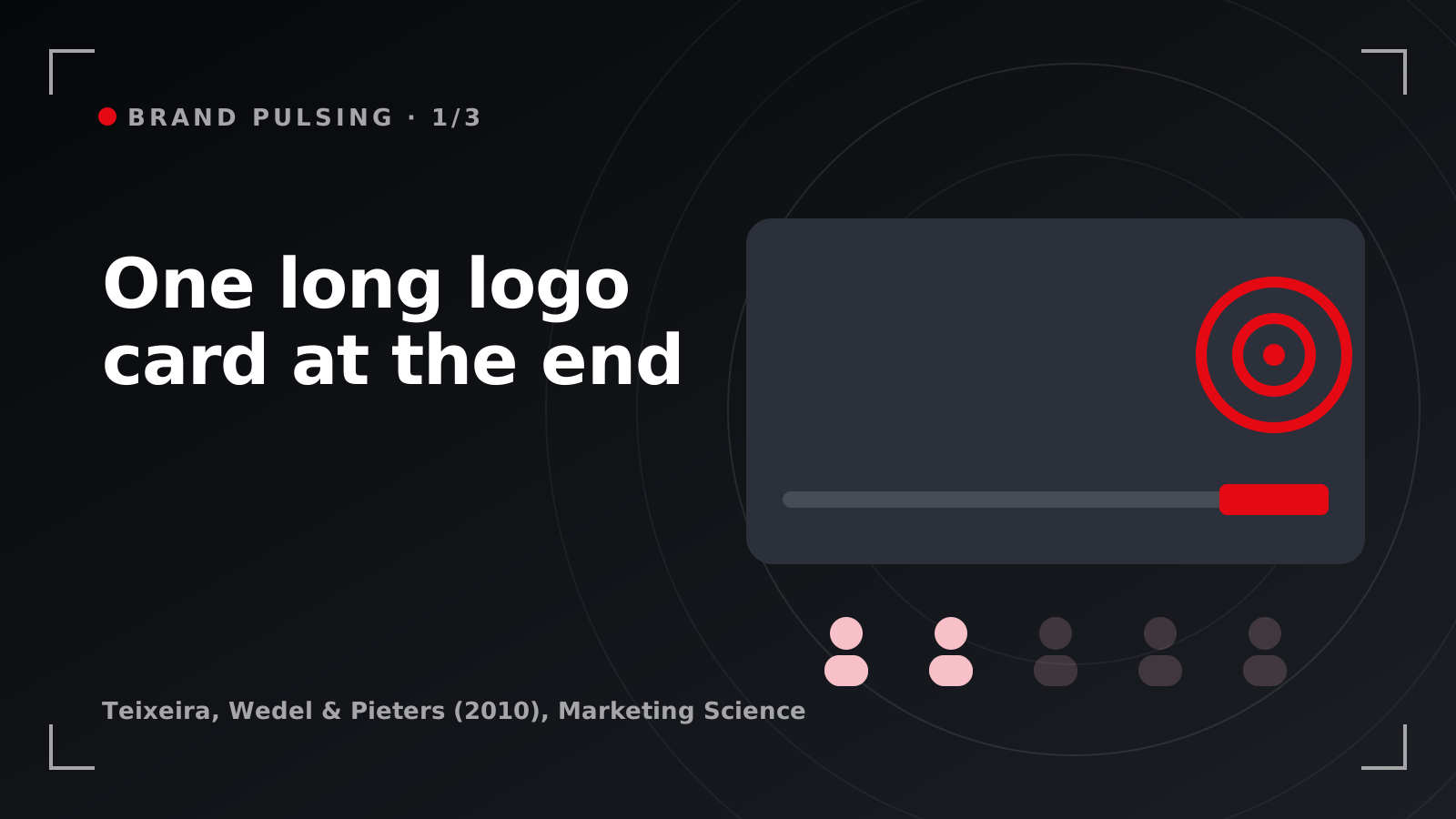
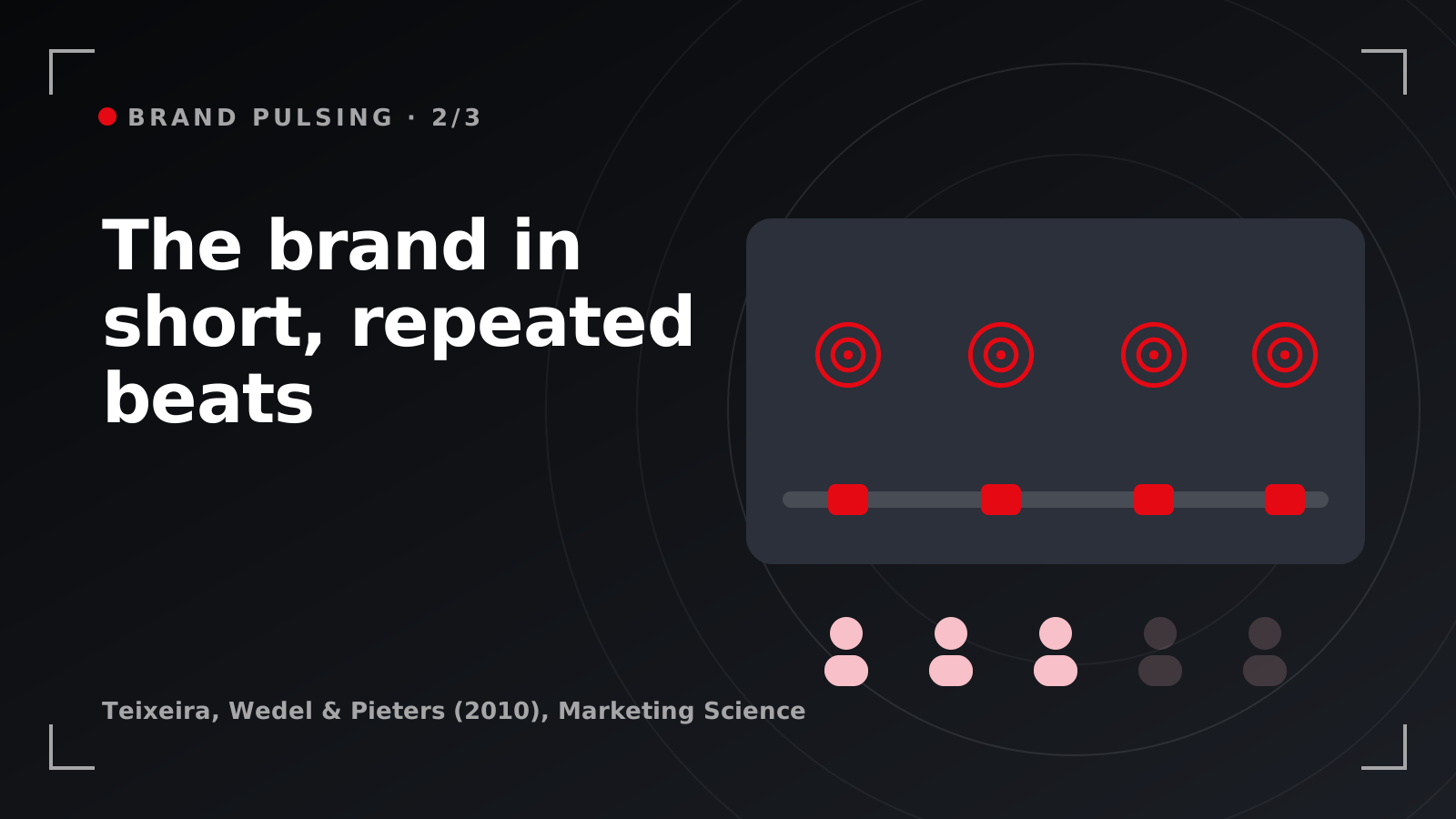
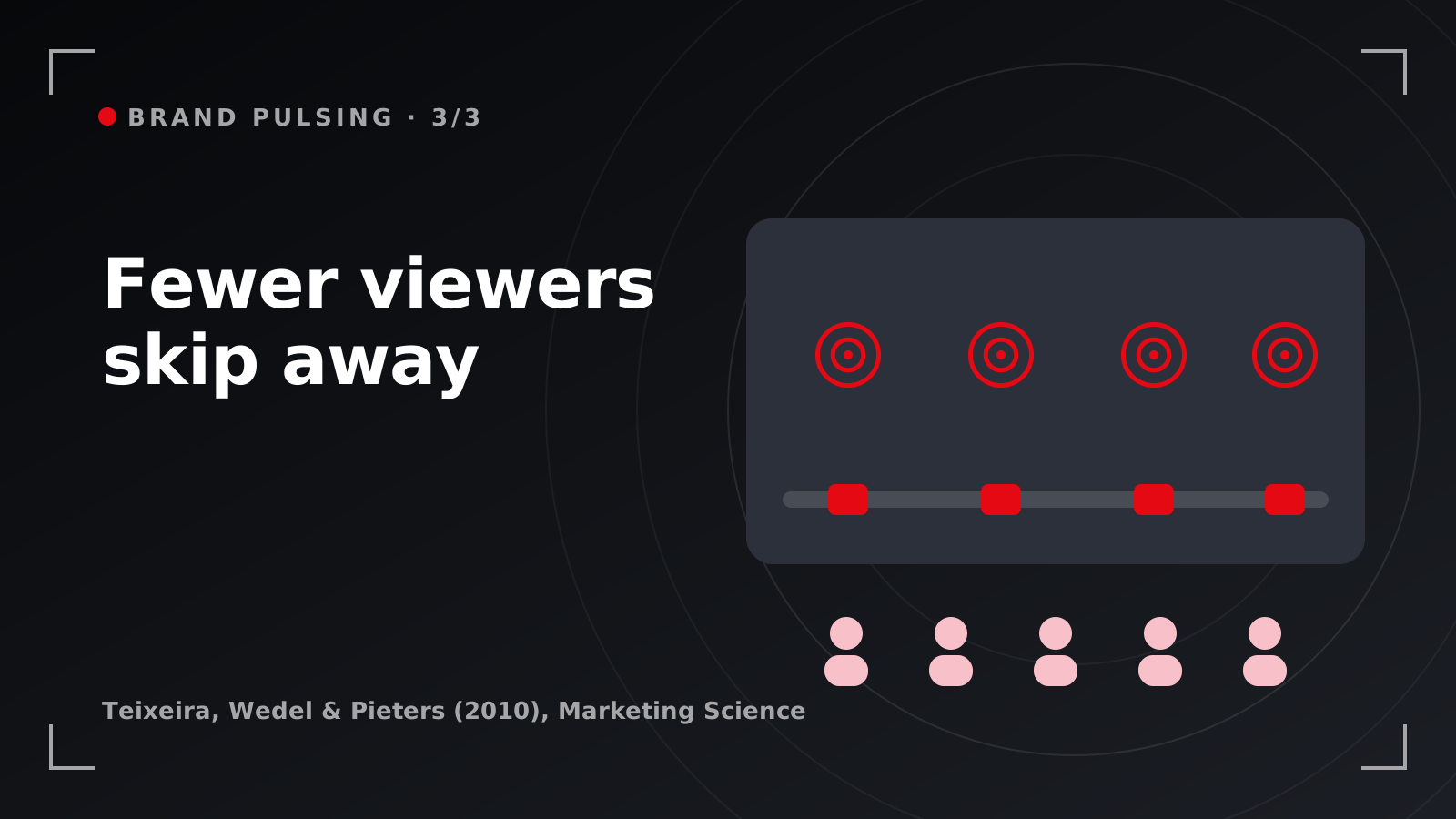
- One long logo card at the end, and viewers reach for the skip button.
- The same brand exposure, split into short, repeated beats.
- Fewer viewers skip away.
Brief it as: “A 30-second pre-roll that shows our brand in four brief, off-centre moments and closes on a mark held for about a second.”
Brand-first comedy spot
The job: buy attention in feeds where nobody asked to see you. B2B has a deep supply of shared frustration to draw on: the meeting that could have been an email, the spreadsheet with 40 tabs, the approval chain that loops back to its first signatory.
The evidence: Teixeira, Picard and el Kaliouby tracked the faces of 178 consumers watching 82 ads in their homes and workplaces.[3] Entertainment had an inverted-U relationship with purchase intent: some helped, too much hurt. Entertainment placed after the brand appeared was positively associated with purchase intent, and entertainment placed before it was not. Purchase intent was self-reported, so read this as a finding about stated intent.
A meta-analysis by Eisend of 369 correlations adds the second half of the rule.[4] Humour lifted attention, liking and brand attitude, with its effect on attitude toward the ad twice as large as its effect on attitude toward the brand. It also significantly reduced source credibility. The joke gets you watched; the brand and the proof have to stand on their own.
Brief it as: “One recognisable workplace frustration, our brand named in the opening seconds, a single joke that lands after it, and a straight final line.”
APAC note: humour is the least portable idea in this library. A joke about a boss can read as disrespectful in one market and ordinary in the next. Have someone in each market review the script before the shoot.
Two-cut industry insight film
The job: put your company’s point of view on a shift in your industry, such as a new regulation, a change in how buyers work, or a pattern your team keeps seeing, and cut it as two edits from one shoot.
The evidence: Tellis, MacInnis, Tirunillai and Zhang ran two field studies of video ad sharing across social platforms, coding 11 emotions and more than 60 ad characteristics.[5] Purely informational ads were shared less overall, except in risky categories. Amusement, excitement, inspiration and warmth increased sharing, and surprise, plot and characters produced those emotions. The finding that matters most for B2B is the platform split: emotional ads were shared more on general platforms (Facebook, Google+, Twitter) than on LinkedIn, and the reverse held for informational ads.
The research · Sharing by platform
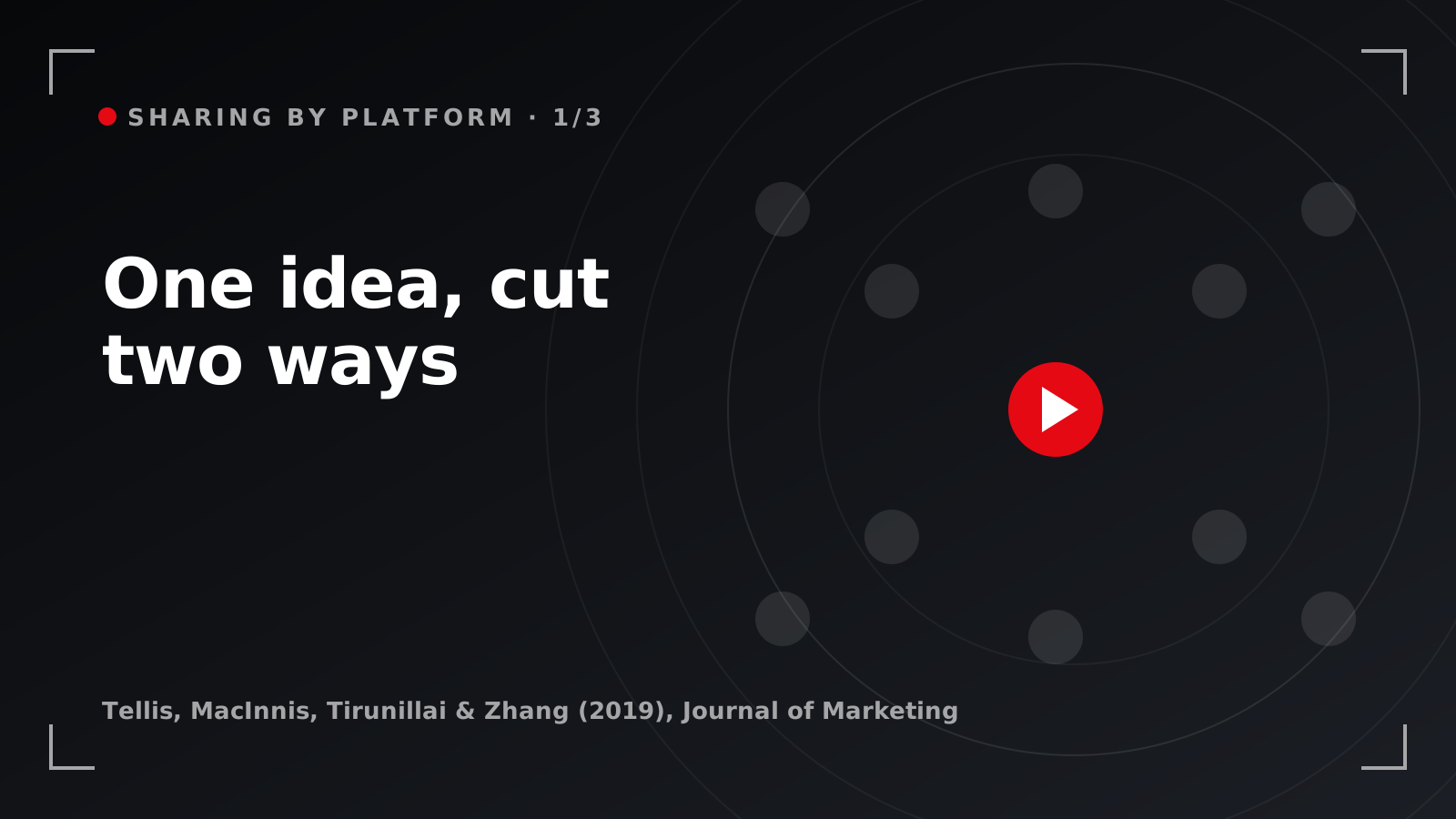
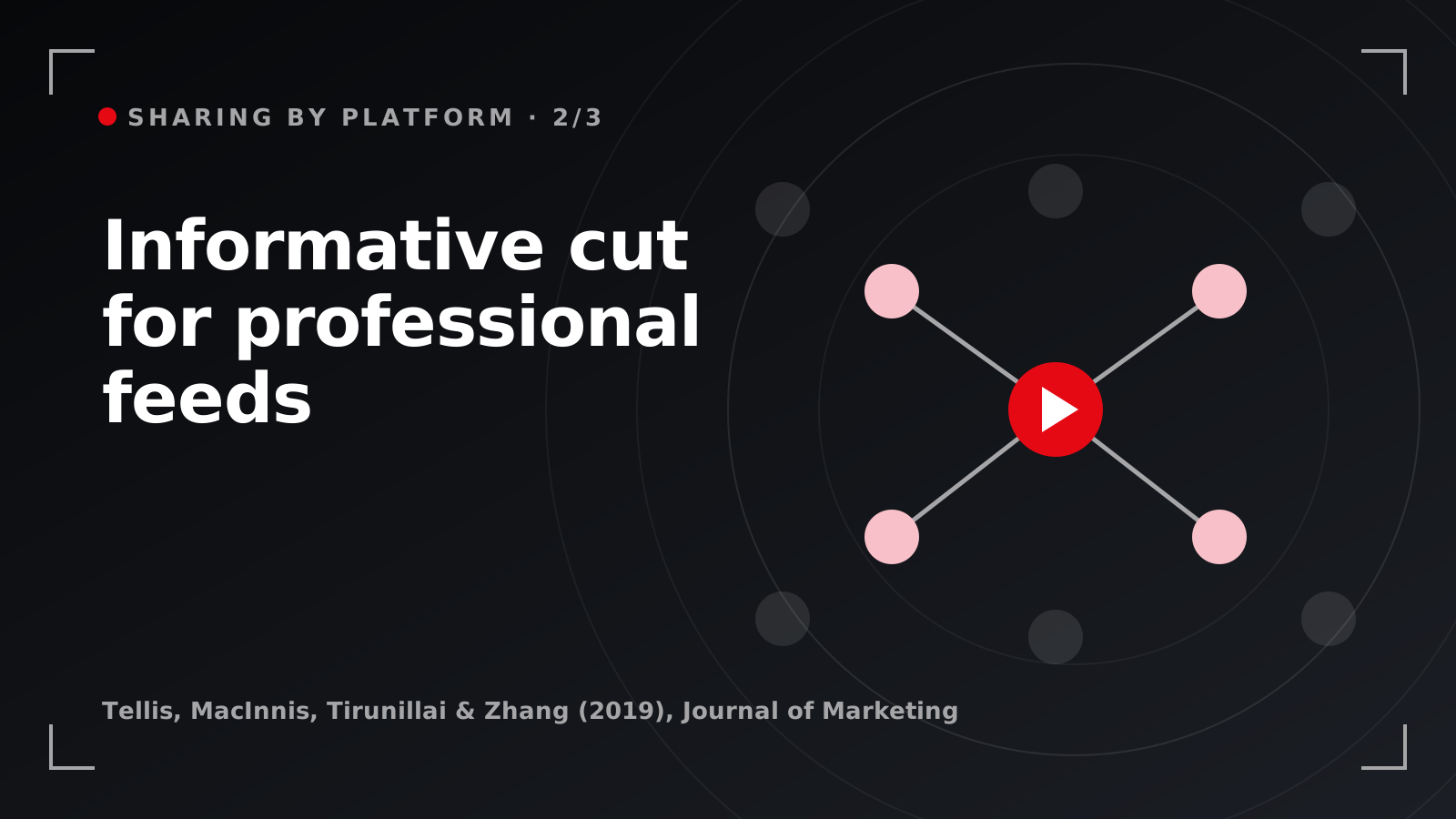
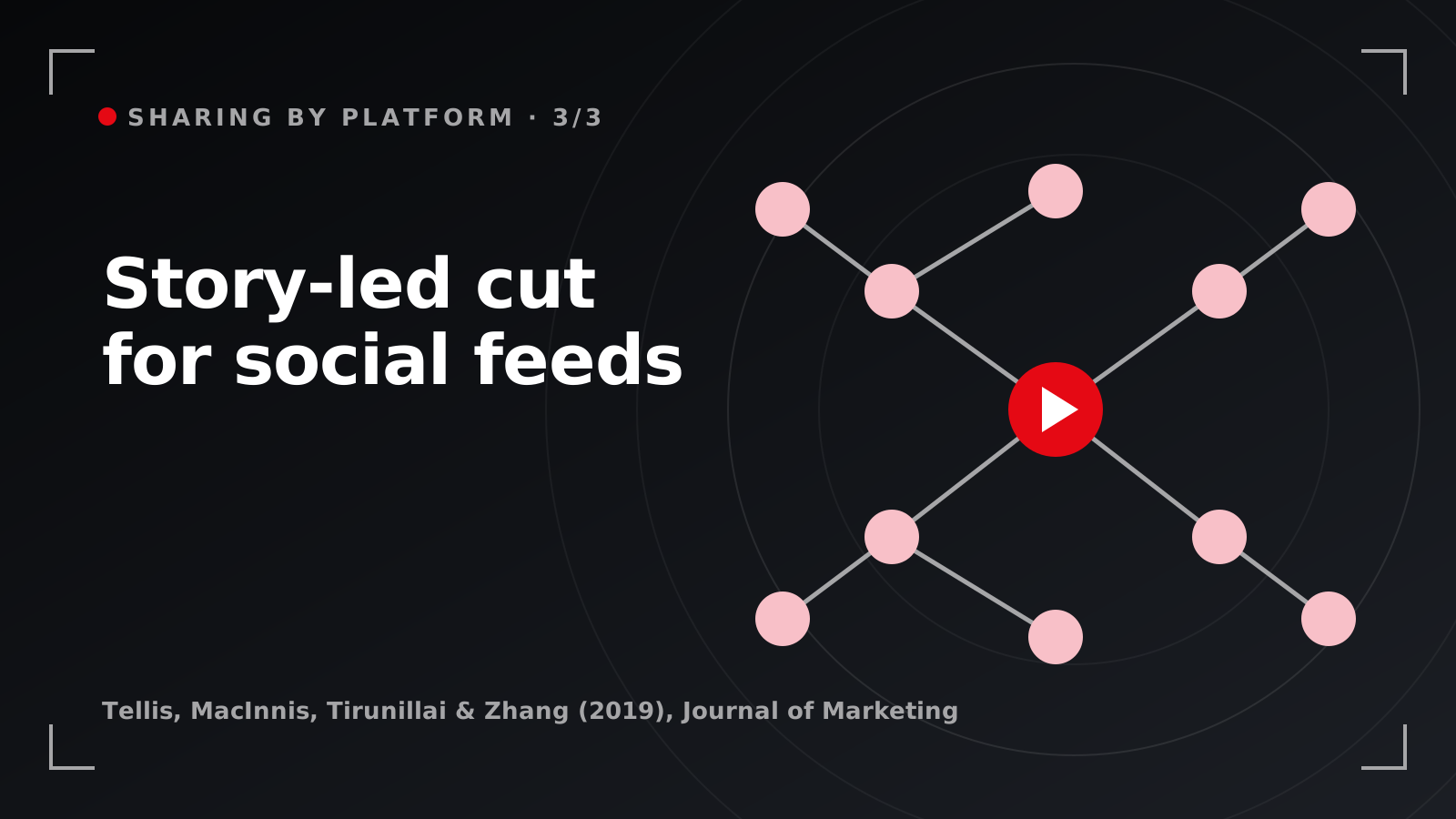
- One idea, cut two ways from the same shoot.
- An informative cut for professional feeds such as LinkedIn.
- A story-led cut for general social feeds.
The same study found sharing greatest when ads ran a moderate 1.2 to 1.7 minutes, and found that prominent early or persistent branding reduced sharing.[5] That sits in tension with the brand-first comedy spot, and the tension resolves by goal: brand early when the edit is meant to move intent, brand lightly when the edit is meant to be passed on. The data predate TikTok and Reels.
Brief it as: “One insight, two edits of about 90 seconds: the facts and a clear takeaway for LinkedIn, a character and a turn for general social, both with light branding.”
For shorter formats built from the same material, see our short-form video ideas for B2B.
Product launch film
The job: give a launch one image the market remembers. The strongest product launch video ideas share a single hero picture of the new capability, used everywhere: the thumbnail, the first frame of the hero film, the vertical teaser, the static post and the keynote opener.
The evidence: Pieters and Wedel used infrared eye tracking on 1,363 print ads and more than 3,600 consumers.[6] The picture was the element best at capturing attention, independent of its size; text drew attention in proportion to its size; and the brand element was best at passing attention on to the rest of the ad. These were print ads, so apply the finding where video behaves like print: the thumbnail, the opening frame and static cutdowns.
Brief it as: “A launch film built around one hero image of the new capability that works as the thumbnail, the first frame and the static post.”
APAC note: a regional launch rarely lands on one day. Plan the Singapore release, then market-by-market versions with local subtitles and on-screen text, and hold the hero image constant across all of them.
Know the buyer moment, but not the idea?
Tell us where your pipeline slows down and who the buyer is. We will come back with a creative approach: the format, the story device and the cuts it needs for each channel.
Talk through a video idea →Consideration: ideas for buyers building a shortlist
Now the buyer is looking. They want to know what you do, who is behind it, and whether anyone like them has trusted you with the problem.
Founder point-of-view film
The job: show a shortlisting buyer that the people behind the product understand their world. A founder, facing the lens, makes one argument about how the category should work, in about two minutes and in their own words.
The evidence: Beege and colleagues randomised 88 participants to an educational video in which the lecturer faced the camera or stood side-on, and appeared near or far.[7] Frontal orientation produced a large, significant retention effect; distance made no significant difference. The authors link it to the feeling of being directly addressed. It is a learning study, and the craft lesson carries straight into a founder film: square to camera, speaking to one person.
Brief it as: “Our founder, facing the lens, making one argument about how our category should work, in under two minutes.”
APAC note: on-camera talk is the hardest format to version. Plan subtitles for every market, and keep a voiceover-led explainer alongside it for markets that need a dubbed version. Our guide to localising a video for Southeast Asia covers the options.
60-second product explainer
The job: answer “what does it do, and why should I care?” before a homepage visitor leaves. Most animated video ideas for business start here, because animation can show systems a camera cannot film: data moving between tools, a model scoring a risk, a permission rule taking effect.
The evidence: a meta-analysis by Höffler and Leutner compared instructional animation with static pictures across 26 studies and 76 comparisons.[8] Animation’s advantage was d = 0.37 overall and rose to d = 1.06 when the subject was procedural knowledge, something done in steps. Animate what changes, and keep what stands still simple.
See how that played out when Reclaim Security used a 60-second homepage explainer to correct how buyers filed its AI platform, browse more B2B SaaS explainer examples from our portfolio, and read the explainer video techniques backed by research before you write the script.
Brief it as: “Sixty seconds for a visitor with no context: the pain they recognise, the gap we close, and the one outcome that matters to them.”
Live-drawn whiteboard explainer
The job: make architecture, integrations or data flows easy to follow for technical evaluators. A solutions engineer draws the diagram on a glass board as they explain it, or an animated hand builds it line by line under the voiceover.
The evidence: Fiorella, Stull, Kuhlmann and Mayer ran two randomised experiments with a video lecture.[9] Diagrams drawn live while the presenter explained beat finished static drawings, d = .54. When the presenter was visible, eye contact with the camera also improved learning, d = .54. Simply having the presenter on screen added no benefit by itself. The participants were college students learning about the kidney; the transferable part is building the picture in front of the viewer.
Brief it as: “A solutions engineer draws our architecture layer by layer on a glass board, looking up to camera as each layer goes on.”
Customer story film
The job: let a buyer watch someone like them live through the problem and come out the other side. One protagonist, one arc from problem to resolution, and your product in a supporting role.
The evidence: Green and Brock ran four experiments with 97, 69, 274 and 258 participants.[10] The more absorbed people were in a story, the more their beliefs moved toward it and the more they liked its protagonists, and absorbed readers noticed fewer false notes. Reduced transportation led to reduced story-consistent beliefs and evaluations. Labelling the story as fact or fiction made little difference. The stimuli were written stories; the lesson for film is to protect the arc, because every cutaway to a feature list breaks the absorption that does the persuading.
Brief it as: “One customer, the problem they lived with, the moment it changed, and the result in their own words, cleared for use before the shoot.”
You can see customer and brand stories in our portfolio.
Phone-shot expert clips
The job: put the people who know the product in front of buyers, fast. Your product lead, a customer success manager or an engineer answers one real question from a sales call, filmed on a phone in a single take, captioned and posted the same week.
The evidence: Hautz, Füller, Hutter and Thürridl tested user-made against agency-made video at low and high technical quality.[11] User-made video showed no general advantage. At low technical quality, though, user-made videos earned significantly more trust and perceived expertise than agency videos, along with stronger intentions. At high quality the trust advantage disappeared. The video promoted a tourism destination, so treat this as a signal about authenticity: lo-fi works when it genuinely comes from a person, and polish belongs on the brand film.
Brief it as: “Our product lead answers the question prospects ask most, on a phone, in one take, captioned, in under 90 seconds.”
Decision: ideas for the committee that signs
Enterprise deals are decided by people who never attended the demo. Videos at this stage give your champion something to forward and give each committee member the answer to their own question.
Workflow demo series
The job: show the product completing the evaluator’s actual task. One short video per workflow, from the starting screen to the finished result, on a clean demo account.
The evidence: this is where the procedural finding from Höffler and Leutner applies most directly: animation’s advantage over static pictures reached d = 1.06 for procedural knowledge.[8] A workflow is a procedure. Show every step moving, highlight each click point, and hold on the result.
Brief it as: “One workflow per video, start to finished result, filmed on a clean demo account with the cursor and click points highlighted.”
If you are deciding which to make first, read explainer video vs product demo video.
Anonymised case study film
The job: use your best proof when it sits behind a confidentiality agreement. Pick the most representative implementation you can show, rebuild it as a purpose-made demonstration that carries nothing belonging to the client, and narrate it around the outcomes a committee signs off.
The evidence: no published study here, only studio practice. Blurred screen recordings draw attention to what is hidden, while a purpose-built demonstration looks like a product. Read how kShuttle built an enterprise case study video around NDA-protected work for the full approach.
Brief it as: “Our most representative implementation, rebuilt as a public demonstration, told through the business outcomes a risk officer and a finance signatory care about.”
APAC note: banks, insurers, hospital groups and MAS-regulated fintechs often cannot appear on camera at all. This idea lets you sell into those sectors with proof intact.
Buying-committee cutdown
The job: arm your champion. Cut your explainer or case study into a 60-second version for each role on the committee, one for finance, one for IT, one for risk, so the champion can forward it without writing a covering note.
The evidence: placement matters as much as the edit. A systematic review by Noetel and colleagues across 105 studies found a much larger effect when video was added alongside existing material than when it replaced an existing method.[12]
g = 0.80
the effect when video was added alongside existing teaching, against
g = 0.28 when it replaced an existing method, across 105
studies in higher education.
Noetel et al. (2021), Review of Educational Research[12]
Those studies measured learning in universities. The principle holds for a sales sequence: a cutdown sent next to the proposal and the security pack does more work than a video left alone on a landing page.
Brief it as: “A 60-second cut for each committee role, written so the champion can forward it without adding a word.”
Objection-answer videos
The job: answer the three objections that stall deals before a buyer raises them: the security review, the integration effort, the question of where data is stored. The person accountable for each answer delivers it on camera, with the documentation on screen.
The evidence: Eisend’s meta-analysis found that humour significantly reduces source credibility,[4] so these videos stay straight-faced. The frontal-orientation finding from Beege and colleagues applies too: have the speaker face the lens and address the viewer directly.[7]
Brief it as: “Our head of security answers the data-storage question, facing camera, with the relevant documentation on screen and no jokes.”
APAC note: data questions vary market by market across the region. Record a core answer, then short market-specific inserts your country teams can add.
After the sale: ideas that drive adoption
A signed contract is the start of the renewal conversation. Video after the sale keeps customers using what they bought and noticing what you ship next.
Onboarding tutorial series
The job: get new users to their first result without a support ticket. One task per video, placed in the product and in the help centre at the moment the task comes up.
The evidence: Guo, Kim and Rubin analysed 6.9 million video watching sessions and found engagement falling away sharply as videos ran past about six minutes.[13] The data came from online courses, which makes it a close match for tutorials. Keep each one well inside that limit, and remember the procedural advantage for animation when the task has steps.[8]
Brief it as: “One task per video, under three minutes, opening on the finished result and ending on the next task to try.”
Feature release clips
The job: make sure existing customers see what you ship. A short clip per release, sent in the release email, shown in the product and handed to customer success for account reviews.
The evidence: no published study speaks to release clips directly. The studio rule is one capability per clip, shown working in the customer’s context, with the location of the feature in the final seconds.
Brief it as: “One new capability, the problem it removes, a 30-second screen capture of it working, and where to find it.”
For internal launches, all-hands films and investor updates that sit alongside these, see our guide to corporate video production in Singapore.
All 16 ideas at a glance
Use this table to map the ideas against your funnel. The evidence column names what each study actually tested, so you can see which findings come from advertising and which from learning research.
| Idea | Buyer stage | Best placement | The evidence |
|---|---|---|---|
| Problem-world brand film | Awareness | Homepage, events, paid social | Narrative transportation meta-analysis, van Laer et al. (2014)[1] |
| Brand-pulsed pre-roll ad | Awareness | YouTube and skippable pre-roll | TV commercials and zapping, Teixeira, Wedel & Pieters (2010)[2] |
| Brand-first comedy spot | Awareness | Paid social, event screens | Ad face tracking, Teixeira et al. (2014)[3]; humour meta-analysis, Eisend (2009)[4] |
| Two-cut industry insight film | Awareness | LinkedIn and general social | Video ad sharing by platform, Tellis et al. (2019)[5] |
| Product launch film | Awareness | Launch page, keynote, thumbnails | Print ad eye tracking, Pieters & Wedel (2004)[6] |
| Founder point-of-view film | Consideration | About page, LinkedIn, investor follow-up | Presenter orientation in video, Beege et al. (2017)[7] |
| 60-second product explainer | Consideration | Homepage, first sales email | Animation vs static pictures, Höffler & Leutner (2007)[8] |
| Live-drawn whiteboard explainer | Consideration | Technical pages, solution briefs | Dynamic drawing and eye contact, Fiorella et al. (2019)[9] |
| Customer story film | Consideration | Case study pages, sales follow-up | Story absorption experiments, Green & Brock (2000)[10] |
| Phone-shot expert clips | Consideration | LinkedIn, sales follow-up | User vs agency video quality, Hautz et al. (2014)[11] |
| Workflow demo series | Decision | Trial pages, evaluation packs | Procedural animation effect, Höffler & Leutner (2007)[8] |
| Anonymised case study film | Decision | Enterprise proposals, regulated sectors | Studio practice; no published study |
| Buying-committee cutdown | Decision | Champion emails, proposal packs | Video added vs replacing, Noetel et al. (2021)[12] |
| Objection-answer videos | Decision | Security pages, procurement packs | Humour and credibility, Eisend (2009)[4] |
| Onboarding tutorial series | After the sale | In-product, help centre | Engagement by video length, Guo, Kim & Rubin (2014)[13] |
| Feature release clips | After the sale | Release emails, account reviews | Studio practice; no published study |
Adapting B2B video ideas across APAC
A video made in Singapore for a regional B2B brand will play in Jakarta, Bangkok, Seoul, Tokyo and Sydney within a quarter. The ideas above hold across the region. The execution changes in five places.
- Languages. Bahasa Indonesia, Thai, Vietnamese, Japanese and Korean come up often in regional B2B work. Voiceover-led animation is the easiest idea to version, because the voice track and on-screen text change while the picture stays. On-camera founder and customer films need subtitles, and sometimes a local speaker.
- Messaging channels. LinkedIn carries B2B video in Singapore, Australia and India. In Thailand, Japan and Taiwan, short clips also travel on LINE; in Korea, on KakaoTalk; for China-facing teams, on WeChat. Cut phone-shot expert clips and feature release clips as vertical files that sit well in a chat thread.
- Regional buying committees. Many enterprise deals involve a regional headquarters in Singapore plus country teams with their own sign-off. The buying-committee cutdown earns its keep here: a version per role, and where needed a version per country, so the regional champion can brief local colleagues.
- Regulated sectors. Buyers in MAS-regulated fintech, healthtech and cybersecurity often need extra approvals before a customer can appear on camera. Plan the anonymised case study film and objection-answer videos early, and allow time for customer and legal approvals.
- Humour and tone. A comedy spot that plays well in Sydney can land flat or badly in Tokyo or Jakarta, and a direct comparison with a competitor reads differently again. Get a local review of every script that relies on humour, hierarchy or comparison.
For the mechanics of subtitles, dubbing and voice casting, read our guide to multilingual video localisation in Southeast Asia.
How to choose your first three
Sixteen ideas is a library, and nobody should make all of them this year. Start with the stage where deals stall, then pick one idea from that stage and one from each side of it.
For most SaaS companies that means the 60-second product explainer first, because every other video leans on it. A customer story film or a workflow demo series comes next. The third depends on your stall: a buying-committee cutdown for long enterprise cycles, an onboarding tutorial series for weak adoption, a two-cut insight film when nobody has heard of you.
Pick the video by the moment the buyer gets stuck. The creative idea is how you get them unstuck.
Planning a video library for the year?
See the explainer, brand and customer work in our portfolio, then send us your buyer stages and markets. We will map the ideas, the story approach and every cut and language version into one creative plan.
Plan your video ideas →The short version
The best B2B video ideas are chosen by buyer moment. For awareness, tell a problem-world story, pulse your brand through paid spots, keep humour after the brand, and cut insight films two ways for LinkedIn and general social. For consideration, make a 60-second explainer, a founder film facing the lens, live-drawn diagrams, customer stories and phone-shot expert clips. For the decision, give the committee workflow demos, anonymised case studies, role cutdowns and straight-faced objection answers. After the sale, keep tutorials short and release clips focused. Plan languages, channels and approvals for APAC at the brief.
Frequently asked questions
What videos should a B2B company make first?
Start with a 60-second product explainer, because every other video leans on it. It sits on your homepage, opens sales emails and gives social cuts a source. Add a customer story film next, then a workflow demo for the feature prospects ask about most. Brand films and comedy spots earn their place once buyers can already understand what you sell.
How do you come up with creative video ideas for a B2B brand?
Start from the buyer’s moment and work back to the format. List the questions prospects ask at each stage, the objections that stall deals and the tasks new customers struggle with. Each one is a video brief. Then pick the creative device, such as a story, a live drawing or a customer on camera, that published research links to the outcome you need.
Does emotional storytelling work in B2B video?
Yes, when the story carries proof and suits the platform. A meta-analysis of narrative transportation links absorption in a story to shifts in attitudes and intentions. A study of video ad sharing found emotional ads were shared more on general social platforms than on LinkedIn, where informational ads did better. For B2B, tell a real customer’s story and keep the facts visible.
Which video ideas work best for SaaS companies?
A 60-second explainer, a workflow demo series and an onboarding tutorial series do the most work for SaaS companies. Software is procedural, and animation’s measured advantage over static pictures is largest for procedures. Add a customer story film for buyers building a shortlist, and feature release clips so existing users keep adopting what you ship.
Should a B2B video be animated or live action?
Choose animation for anything invisible or procedural, such as data flows, security layers or a sequence of steps, and live action for anything that needs a human face to be believed. Customer stories, founder films and phone-shot expert clips earn trust on camera. Many strong B2B videos combine both: a real person on screen with animated overlays explaining the product.
How do you adapt one video idea for different APAC markets?
Plan the market versions at the brief, before anyone films. Build on-screen text as editable graphics, keep a clean master with separate subtitle files, and favour voiceover-led structures where many languages are needed. Then have someone in each market review humour and tone, and cut short vertical versions for the channels buyers use there, such as LINE, KakaoTalk or WeChat.
References
- van Laer, T., de Ruyter, K., Visconti, L. M., & Wetzels, M. (2014). The extended transportation-imagery model: A meta-analysis of the antecedents and consequences of consumers’ narrative transportation. Journal of Consumer Research, 40(5), 797–817. doi:10.1086/673383
- Teixeira, T. S., Wedel, M., & Pieters, R. (2010). Moment-to-moment optimal branding in TV commercials: Preventing avoidance by pulsing. Marketing Science, 29(5), 783–804. doi:10.1287/mksc.1100.0567
- Teixeira, T., Picard, R., & el Kaliouby, R. (2014). Why, when, and how much to entertain consumers in advertisements? A web-based facial tracking field study. Marketing Science, 33(6), 809–827. doi:10.1287/mksc.2014.0854
- Eisend, M. (2009). A meta-analysis of humor in advertising. Journal of the Academy of Marketing Science, 37(2), 191–203. doi:10.1007/s11747-008-0096-y
- Tellis, G. J., MacInnis, D. J., Tirunillai, S., & Zhang, Y. (2019). What drives virality (sharing) of online digital content? The critical role of information, emotion, and brand prominence. Journal of Marketing, 83(4), 1–20. doi:10.1177/0022242919841034
- Pieters, R., & Wedel, M. (2004). Attention capture and transfer in advertising: Brand, pictorial, and text-size effects. Journal of Marketing, 68(2), 36–50. doi:10.1509/jmkg.68.2.36.27794
- Beege, M., Schneider, S., Nebel, S., & Rey, G. D. (2017). Look into my eyes! Exploring the effect of addressing in educational videos. Learning and Instruction, 49, 113–120. doi:10.1016/j.learninstruc.2017.01.004
- Höffler, T. N., & Leutner, D. (2007). Instructional animation versus static pictures: A meta-analysis. Learning and Instruction, 17(6), 722–738. doi:10.1016/j.learninstruc.2007.09.013
- Fiorella, L., Stull, A. T., Kuhlmann, S., & Mayer, R. E. (2019). Instructor presence in video lectures: The role of dynamic drawings, eye contact, and instructor visibility. Journal of Educational Psychology, 111(7), 1162–1171. doi:10.1037/edu0000325
- Green, M. C., & Brock, T. C. (2000). The role of transportation in the persuasiveness of public narratives. Journal of Personality and Social Psychology, 79(5), 701–721. doi:10.1037/0022-3514.79.5.701
- Hautz, J., Füller, J., Hutter, K., & Thürridl, C. (2014). Let users generate your video ads? The impact of video source and quality on consumers’ perceptions and intended behaviors. Journal of Interactive Marketing, 28(1), 1–15. doi:10.1016/j.intmar.2013.06.003
- Noetel, M., Griffith, S., Delaney, O., Sanders, T., Parker, P., del Pozo Cruz, B., & Lonsdale, C. (2021). Video improves learning in higher education: A systematic review. Review of Educational Research, 91(2), 204–236. doi:10.3102/0034654321990713
- Guo, P. J., Kim, J., & Rubin, R. (2014). How video production affects student engagement: An empirical study of MOOC videos. Proceedings of the First ACM Conference on Learning @ Scale, 41–50. doi:10.1145/2556325.2566239